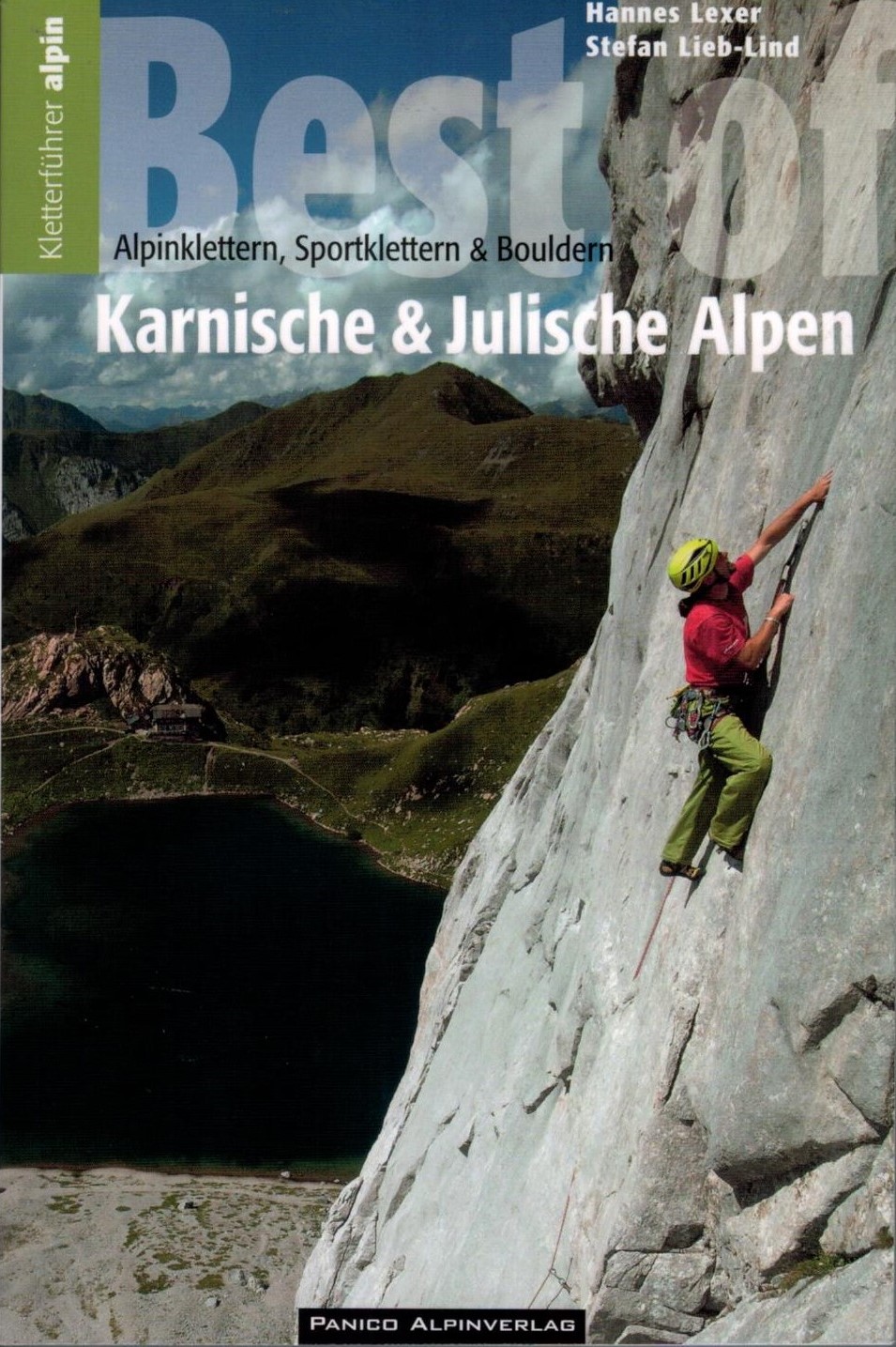
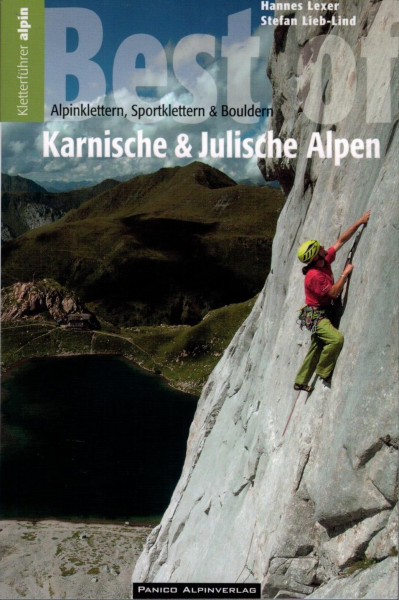
The history of climbing in Friuli Venezia Giulia is one of the most important in Italy, since it arises from the careers of mountaineers the likes of Comici and Carlesso, who “invented”, out of the blue and in the first decade of 20th century, Val Rosandra and Dardago as a playground where it was possible to train for more ambitious tasks in the Dolomites.
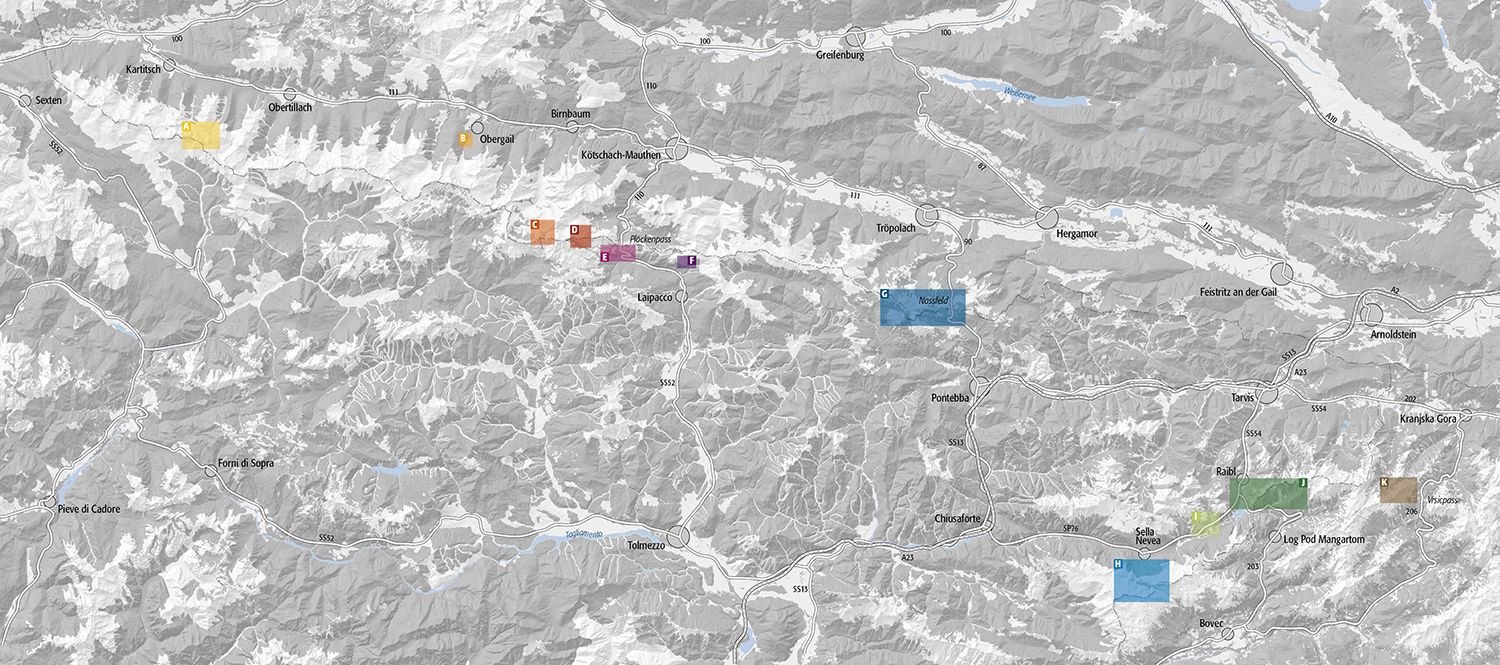
This area, which can be roughly divided into three different sections, features several charming and testing crags and walls, well-suited both for the beginner and for the pro.
It includes the renowned overhangs of Erto, the small crags of the local Dolomites, the Tarvisio and Carnia walls; Trieste is also reviewed and carefully described: its famous crags such as Costiera and Napoleonica are of course featured in this book.
Then, we have “the other side”, just across the border. Osp, Mišja Pec and Crni Kal are well-known all over Europe. Once they were mostly forbidden, but right now they are destinations for every climber in Europe.
This second edition of a comprehensive guidebook has been born thanks to the collaboration of an active community, whose members do believe in promoting and sharing the beauty of their lands.
432 pages
language italian
edition 2020
D. Bucco
Versante Sud
The Publishing House of the Alpine Association of Slovenia (PZS, a UIAA full member) has released a new guidebook: Moderne večraztežajne smeri (Modern Multi-pitch Climbs) by Andrej Grmovšek and Viktor Relja. It’s the first of its kind in Slovenia and all the essential information is provided not only in Slovenian but also in English.Andrej Grmovšek and Viktor Relja have compiled 300 routes on 69 rock faces of the Slovenian Alps, ranging from 4b to 8a+ and up to 700 metres in length.All of the routes in the guidebook are either partially (at least the belay stations) or fully bolted, but they differ in difficulty, length, and commitment. “This is the first guidebook of its kind in Slovenia. Although some of these routes have been around for quite a while, many new climbs have been bolted in recent years, which was one of the reasons we decided on this project. We started working on it about two years ago and the intensity ramped up in the last ten months,” said the editor, Marta Krejan Čokl.The authors of the new guidebook, Andrej Grmovšek and Viktor Relja, are well-known figures in the Slovenian climbing community. Andrej has been climbing for over thirty years and doesn’t plan to stop anytime soon. After having done numerous difficult routes all over the world, he’s recently focused his energy on exploring the lesser-known walls of Slovenian mountains. His usual climbing partner is his wife Tanja, herself an excellent climber. Viktor has also climbed a lot with his wife Suzana; together they’ve opened almost two hundred routes, two thirds of which are fully equipped. They’ve left their mark on mountains outside of Slovenia as well.This guidebook aims to provide an overview of Slovenian rock faces to climbers at home and abroad, as all the essential information has been translated into English. “There are plenty of guidebooks for Slovenian sport-climbing crags, but there hasn’t been a compilation of bolted multi-pitch routes in the mountains. Such guidebooks are very common in other countries. Until now, Slovenia was the only Alpine country without a guidebook for the so-called Plaisir routes. I hope that our book will fill this gap. It includes equipped routes of all grades on good rock, which are accessible to a wide variety of climbers. It provides a useful overview of many routes throughout the Slovenian mountains,” explained Viktor Relja.The faces in the guidebook are ordered from west to east. All routes are marked on photos and there are topos for the more complex ones. The details of routes are displayed using symbols, making route-finding a breeze. The trailheads and starts of routes are marked on maps, and GPS coordinates and QR codes are also provided.Modern multi-pitch routes and sport-climbing are becoming increasingly popular in Slovenia. “Many of the Slovenian rock faces are characterized by poor rock quality and a lack of features, which makes them largely unsuitable for this type of climbing. This guidebook includes pretty much all of the bolted, modern multi-pitch routes in Slovenia,” added Andrej Grmovšek.
386 pageslanguage: slovenian, englishedition 2024V.Relja, A, GrmovšekPZS
The topo guide is dedicated to bouldering along the Soča River near the village of Trnovo ob Soči in Slovenia. The boulders were discovered by Gašper Bratina, who, together with climbers from the Gorica region, began cleaning and climbing them back in 2009. Today, the bouldering area offers more than 1000 high-quality problems, some of which are still untouched and waiting for the strongest boulderers. An expanded version of this guide can also be expected in the future, as potential boulders and even sectors are still being discovered.The bouldering guide took shape in 2020, when Slovenia was hit by the coronavirus epidemic and was confined to its home regions. During this time, the author explored the routes / problems, searched for new boulders and arranged their landings. He noticed how extensive, high quality and beautiful the area is. By creating this bouldering guidebook, he hopes to contribute to the development of bouldering and introduce it to a wider audience in this part of Slovenia.232 pagesLanguage Slovenian, EnglishEdition 2024A. Gregorcic
We use cookies (including third party cookies) to provide you with the best possible service. Some of them are essential, while others help us to improve this website and your experience of it. You have the right to withdraw your consent at any time. You can find more information on Privacy policy.